Liver Surgery
The liver is the largest and most complex solid organ in the human body, performing vital functions such as nutrient metabolism, blood detoxification, and bile production. In my daily practice in Cuenca, Ecuador, I observe with concern how the incidence of liver diseases has increased, profoundly affecting the quality of life of our patients. Liver surgery represents one of the most fascinating and precise challenges in modern medicine, allowing for the treatment of everything from benign lesions to complex malignant tumors. Understanding the foundations of this procedure is the first step toward regaining health and successfully addressing any diagnosis related to this essential organ.
Liver surgery, technically known as hepatectomy, is the surgical procedure to remove all or part of the liver tissue. It is performed to treat malignant tumors, benign lesions, complicated cysts, or trauma. The goal is to eliminate the disease while preserving enough healthy tissue to ensure that the patient’s liver function remains stable.
What is liver surgery?
Liver surgery is a highly specialized intervention that requires deep anatomical knowledge. As a specialist in hepatopancreatic surgery, my focus is on segmental resection, where I remove only the affected portion, respecting the organ’s vascular and biliary architecture. This procedure not only seeks the cure of oncological or functional pathologies but also leverages the liver’s unique ability to regenerate, allowing the patient to regain normal functionality after a controlled period of postoperative recovery.
When is it indicated?
The indication for liver surgery is not generalized; it requires a multidisciplinary evaluation. The most frequent situations I see in my practice at drluisflores.com include:
- Primary malignant tumors: Such as hepatocellular carcinoma (HCC), often associated with cirrhosis or hepatitis.
- Liver metastases: Especially those derived from colorectal cancer, where surgery offers the best chance for long-term survival.
- Symptomatic benign lesions: Adenomas with a risk of bleeding or focal nodular hyperplasia that cause chronic pain.
- Complex liver cysts: Hydatid or polycystic cysts that compromise the function of other organs due to their size.
- Liver trauma: Acute injuries from accidents that put the patient’s life at risk.
The surgical decision is based on international guidelines such as those of the International Hepato-Pancreato-Biliary Association (IHPBA), always considering the liver’s functional reserve (Child-Pugh score) to avoid postoperative liver failure.
Step-by-step process or treatment
Surgical planning is as important as the procedure itself. My care protocol is divided into clear phases:
- Preoperative evaluation: We perform a computed tomography (CT) scan or magnetic resonance imaging (MRI) with contrast to map the liver’s vascularization. We evaluate function through blood tests and, if necessary, assess the residual functional reserve.
- Anesthetic preparation: We work with an anesthesiology team experienced in major abdominal surgery to maintain low central venous pressure during the resection, which is vital for controlling bleeding.
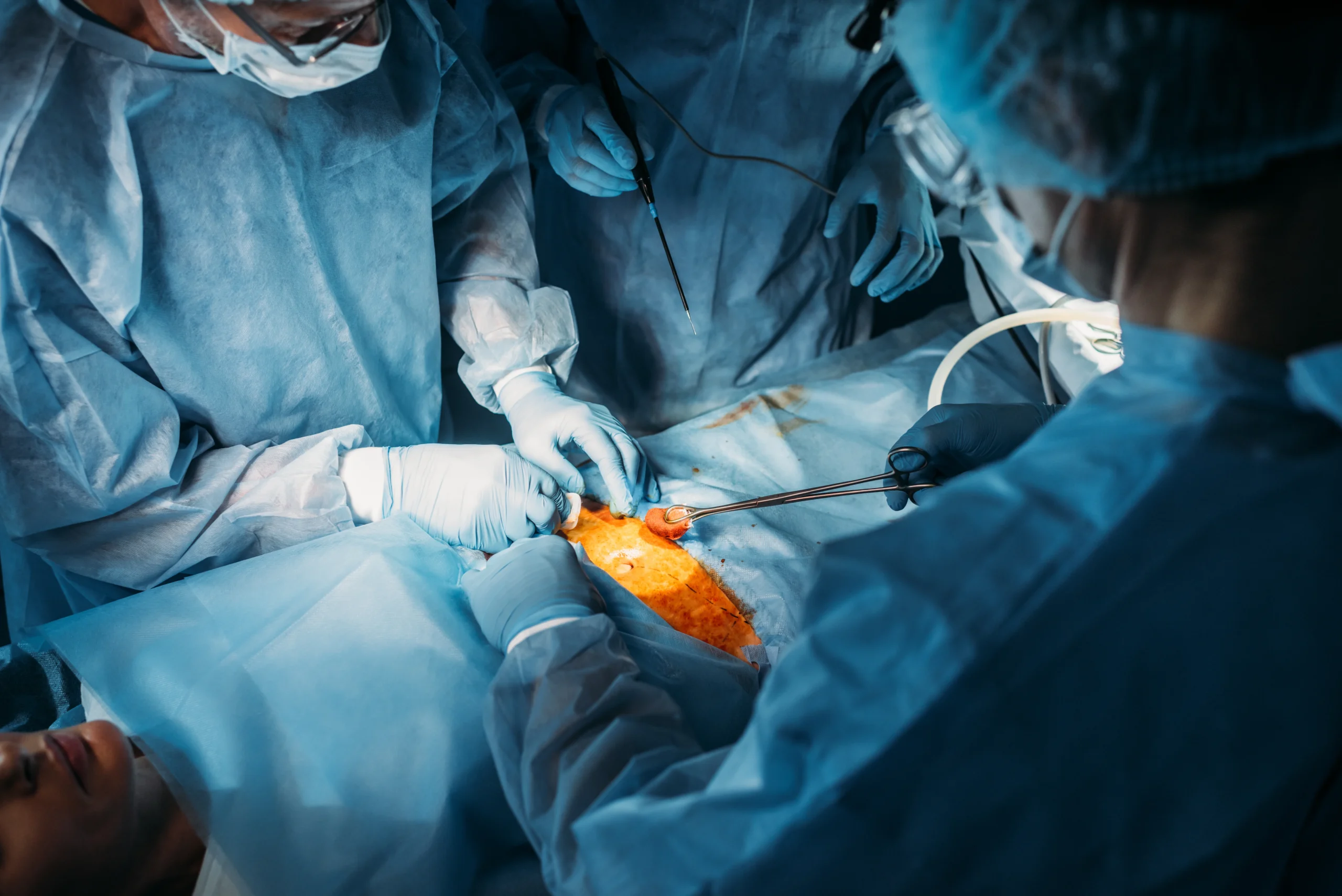
- Access and dissection: We use advanced parenchymal dissection techniques, such as the use of an ultrasonic scalpel (Cavitron), which allows for the separation of liver tissue while protecting veins and arteries.
- Resection: We proceed with the removal of the specific affected segment. The liver has an amazing capacity for regeneration; if we remove up to 60-70% of a healthy liver, it can recover its functional mass in a few weeks.
- Hemostasis control and drainage: We verify the absence of bleeding and bile leaks before finishing, placing strategic drains if the case requires it.
You can learn more about our technology and equipment in the specialized services section of my website.
Recovery and care
Recovery after liver surgery is a gradual process. In the first 24 to 48 hours, the patient remains in the Intensive Care Unit or Intermediate Care for strict monitoring of liver function, coagulation, and hydro-electrolytic balance. Early mobilization is essential to prevent thromboembolic complications. At home, the patient must follow a diet rich in high-quality protein and avoid the consumption of alcohol or hepatotoxic medications, allowing the liver to heal and regenerate. Follow-up through periodic laboratory tests is the key to ensuring long-term treatment success.
How much does it cost in Cuenca, Ecuador?
The cost of liver surgery in Cuenca varies considerably depending on the complexity of the case, the need for specialized surgical material, and the length of hospital stay. As an indicative reference, such a procedure can range between $4,500 and $9,000 USD. It is important to consider that this value includes fees for the multidisciplinary surgical team, operating room charges, specialized supplies, and hospitalization. In my office, we provide a detailed quote after the initial assessment so that the patient has complete clarity on the investment required for their health.
Frequently Asked Questions
Is it painful?
Pain management is a priority in our protocol. We use multimodal analgesia, which combines local anesthetic blocks and intravenous drugs, ensuring that postoperative pain is perfectly manageable and allowing the patient to get out of bed in less than 24 hours.
How long does recovery take?
Hospitalization time is usually 5 to 7 days. Total recovery to resume intense physical activity and work usually ranges between 4 and 8 weeks, depending on the type of resection and the patient’s baseline health.
Does health insurance cover it in Ecuador?
Most private health insurance plans in Ecuador cover hepatopancreatic surgeries, as they are considered highly specialized procedures. However, this depends on the specific conditions of your policy. My administrative team will assist you with the necessary documentation for authorization management.
Can the liver grow back after surgery?
Yes. The liver is the only internal organ capable of regeneration. After a resection, the remaining tissue begins to grow immediately thanks to growth factors, generally reaching its optimal functional mass within a period of 3 to 6 months.
Comparative Table: Types of Surgical Approach
| Characteristic | Open Surgery (Laparotomy) | Laparoscopic / Robotic Surgery |
|---|---|---|
| Invasiveness | High (large incision) | Minimal (small incisions) |
| Recovery | Slow (moderate pain) | Fast (early return) |
| Visualization | Direct | Magnified in 3D/HD |
| Indication | Large or complex tumors | Peripheral or segmental lesions |
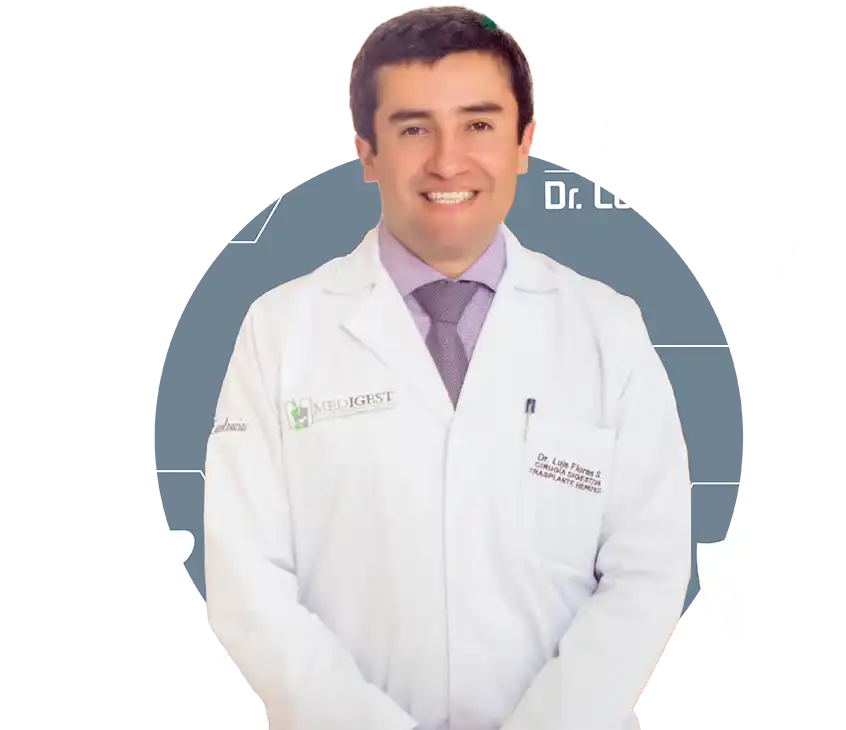
When to consult Dr. Luis Flores?
You should seek a specialized assessment if you have received a diagnosis of a liver mass, if you have persistent elevation of liver enzymes in your tests, or if you suffer from chronic diseases such as cirrhosis that require oncological surveillance. As a digestive surgery specialist in Cuenca, my mission is to offer an honest, scientific, and human assessment. Do not wait for symptoms to worsen; early detection is the difference between simple treatment and more complex surgery. I invite you to schedule a consultation to analyze your clinical case in a personalized way and define the best treatment path for you and your family.